Everything you need to navigate SEND — in one place
From understanding EHCPs to finding financial support, we've gathered the most useful guides, tools, and resources — written with parent carers in mind.
You shouldn't have to piece this together alone. Whether you're just starting out or deep in the process, these resources are written just for you.
Featured Resource
Click to open the guide
What Support Should My Child Receive at School?
A helpful guide from Luton Council
Did you know that your child doesn't need a formal diagnosis or an Education, Health and Care Plan (EHCP) before their school can begin providing additional support?
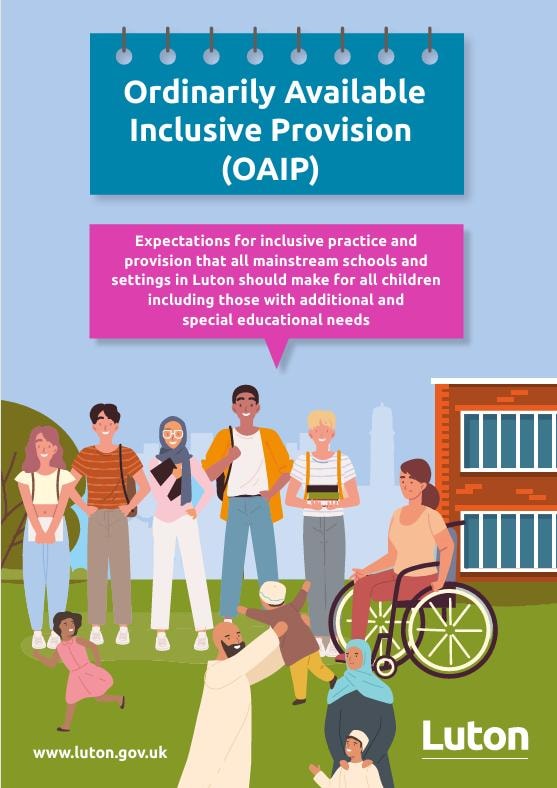
Luton Council's Ordinarily Available Inclusive Provision (OAIP) guide explains the support and adjustments that mainstream schools and educational settings should ordinarily provide for children and young people, including those with SEND.
Why might you find this useful?
Whether your child is struggling with learning, communication, friendships, sensory needs or other aspects of school life, this guide can help you:
✓Understand what support may be available.
✓Feel more confident when talking to teachers and SENCOs.
✓Find examples of adjustments and approaches that could help your child.
✓Understand how schools identify, plan and review support.
You don't need to read the whole document! Start with the sections that matter most to your child.
Remember, every child's needs are different. Understanding what support is available is a positive first step towards helping your child thrive.
Produced by Luton Council and shared by The Chance Hub to help parents and carers find useful information.
↳ Read this next — for children in early years settings
Supporting Your Child in Their Early Years
What support could your child receive at nursery or preschool?
The OAIP guidance above covers school-age children — but the same principles apply from the very start. If your child is in a nursery or preschool setting, this companion guide explains what support should already be available to them.
Are you concerned about your young child's development, communication, learning or behaviour? Perhaps you've noticed that your child needs a little extra help, but you're unsure what support is available or who to speak to.
You don't have to wait for a diagnosis before asking for support.
Luton Council has produced a helpful guide called Ordinarily Available Inclusive Provision: Early Years Supplementary Guidance. It explains the everyday support and approaches that early years settings can use to help children with SEND or additional needs.
Why might you find this guide useful?
It can help you:
✓Understand what support may be available for your child.
✓Learn how nurseries and preschools can adapt activities and environments to meet different needs.
✓Feel more confident when speaking to nursery staff or the setting's SENCO.
✓Explore ways to support your child's learning, communication and development.
✓Understand how you and your child's early years setting can work together.
A little encouragement from The Chance Hub
You know your child in ways that others may not. You notice their interests, their strengths, the things they find difficult — and those little achievements that mean so much.
Your observations matter. This guide can help you have conversations with your child's early years setting about the support that may help them learn, develop and enjoy their early experiences.
Remember, every child is different, and every little step forward deserves to be celebrated.
Produced by Luton Council and shared by The Chance Hub to help parents and carers access useful information and support.
Guides & Articles
Plain-English explanations of the things that matter most.
We do our best to check that the information in these guides is accurate and up to date — but guidance and legislation can change. Please always check the official government website and other official sources to confirm the latest position.
EHCPs5 min read
What is an EHCP and do we need one?
An Education, Health and Care Plan is a legal document that sets out your child's needs and the support they must receive. This guide explains what it covers, who it's for, and how to request one.
Once you've requested an assessment, the local authority has 20 weeks to complete the process. This guide walks you through each stage — what happens, what you'll be asked, and how to make your voice heard.
Reading your child's EHCP: a section-by-section guide
EHCPs are divided into sections A to K. Some sections are more important than others. This guide explains what each section means — and which ones you need to scrutinise most carefully.
SEN Support: what your child's school should be doing
Before an EHCP is in place, schools are expected to support children through a cycle of Assess, Plan, Do, Review. This guide explains what that looks like in practice — and what to do if it isn't happening.
The Annual Review is your chance to shape your child's EHCP. This guide helps you prepare — what to bring, what to say, and how to challenge anything you disagree with.
Mainstream, specialist, DSP, special school — the options can feel confusing. This guide explains the differences and how to request a particular school in your child's EHCP.
What to do if you disagree with the local authority
If your local authority refuses to assess, issue an EHCP, or names the wrong school, you have the right to appeal. This guide explains your options — from mediation to the SEND Tribunal.
The SEND Code of Practice gives parents and carers significant rights. This guide covers the key ones — including the right to be involved, the right to request assessments, and the right to appeal.
DLA and PIP: financial support for disabled children and young people
Disability Living Allowance (for under 16s) and Personal Independence Payment (for 16+) can make a real difference to family life. This guide explains who qualifies, how to apply, and what to do if you're refused.
Carer's Allowance and other support for parent carers
If you spend significant time caring for your child, you may be entitled to Carer's Allowance and other support. This guide explains what's available and how to access it.
The transition to secondary school can be one of the most anxious times for families. This guide covers what good transition planning looks like and how to make sure your child's needs are met from day one.
Transition planningYear 6 Annual ReviewWhat to ask for
From age 14, EHCPs should include a focus on preparing for adulthood — education, employment, independent living, and community participation. This guide explains what that means and how to plan ahead.
Preparing for adulthoodPost-16 optionsAdult services
There are a number of cards and schemes that can save your family money on days out, cinema trips, activities, and more. Many are free or low cost to apply for — and well worth having.
Found a discount scheme that's made a difference to your family? Share it here — your tip could help another parent save money or access something brilliant.
Share a discount or scheme
All tips are reviewed before they appear. Please don't include personal contact details.
Helpful organisations
Trusted external resources — charities, legal advisors, and support organisations.